Visit Ancient China

China is not only one of the largest countries in the world, but also one of the oldest. There aren’t many nations that can trace their heritage back as far as this wonderful country, and with the long and illustrious past comes a fascinating series of ancient towns, cities and sites. This article takes a look at a few of China’s oldest locations that you can visit on a China holiday today.

We start up with a look at the city of Pingyao, one of the best preserved examples of a traditional Han Chinese town in the world. The city was originally founded back in the 14th century and its layout tells the fascinating story of town planning in Imperial China over five centuries. Most of this layout dates back to the Ming and Qing dynasties, with the tell tale sign being the conformity to a Bagua pattern. You can get a lot from the city by just taking a walk around as the streets and storefronts still largely retain their historical appearance.

Luoyang and its World Heritage listed Longmen Grottoes are next on our list of destinations. The city of Luoyang is located in the western reaches of Henan Province. The city was founded in an important location in the middle reaches of the Yellow River surrounded by protective mountains. The city is one of China’s truly ancient locations, with a history dating back to 2100BC; a history that spans 13 of China’s Dynasties. The Longmen Grottoes are a series of caves packed with over 100,000 Buddhist statues, which makes it a site of incredible religious importance.

The final destination on our list is another famous Buddhist shrine. Located near the city of Datong in Shanxi Province are the beautiful Yungang Caves. The cave complex is carved into the side of the Wuzhou Mountain and contains 50,000 Buddhist statues and frescoes. It contains less statuary than the Longmen Grottoes, but the main reason many choose to visit this location is the impressive frescoes and beautiful silks on display.

This is just a small taste of the ancient towns and sites that are open to visitors to the country, and there is so much more to explore. So next time you’re looking for a history and culture packed holiday, why not take a look at China?

Three Famous Beijing Sites

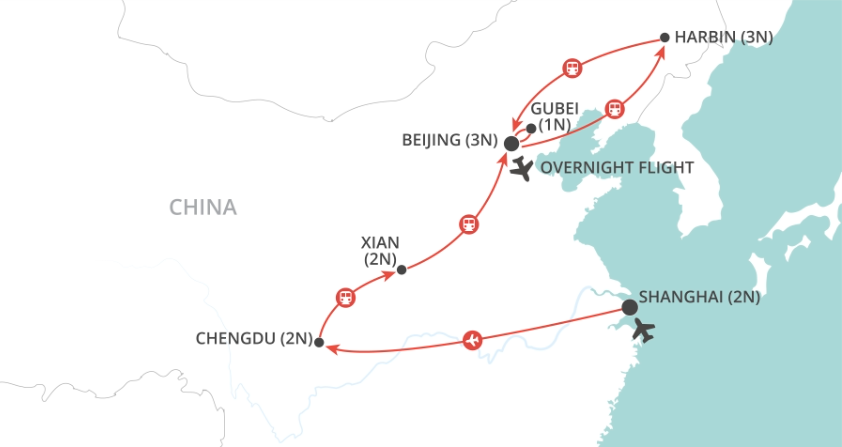
Beijing, one of the most famous cities in China. It’s no wonder many thousands choose to enjoy Beijing tours in this inspirational city, with its impressive history, beautiful ancient monuments and bustling culture. The city is one of the only ones in China to play a part in nearly every significant recorded Chinese event. In this blog, we take a look at some of the most important historical sites in the city, so you to can experience some of Beijing’s unique, historic past.

We start with one of the most famous monuments in Beijing: the Forbidden City. This enormous palace played home to the Chinese Emperors and their families for almost 500 years, a tradition that only ended in 1911. The name comes from the fact that the entry to the city was forbidden to everyone apart from the imperial family and those on official imperial business. Some of the most impressive buildings in the complex include monuments such as the Golden Water Bridges and the Gate of Supreme Harmony. It’s the large, traditional pavilions that draw the biggest crowds though.

Just beyond the Forbidden City is our next site, Tiananmen Square. This expansive open square is the third largest in the world and has been centre stage for many important events in China. Most will know the square from its role in modern history. You can experience much of this past in the two museums just off the square: the Museum of the Chinese Revolution and the Museum of Chinese History. It’s worth taking a moment to just stand in the middle of the square too, to just absorb the feel of one of the most significant, historical locations in China.

Our final site is perhaps the city’s most famous: The Great Wall. It’s been a major draw to the city for millions of visitors due to its unique status. The wall was constructed over the course of almost 2,000 years and is made up of over 3,700 miles of stone walls. Access to the wall from Beijing city is a short trip to the northwest of the city centre. The monument is an impressive structure up close, although it can get crowded so it’s worth visiting early in the morning.

India’s Must-See Sights

Delhi Red Fort 006 300x224 Indias Must See Sights

Red Fort, Delhi

Taking a trip to India is an increasingly popular choice for a holiday and it’s no wonder with so many amazing tours to India available. However, for many people it’s their first time in this beautiful country; this blog takes a look at some of the countries most famous sites, to give the first timers out there a taste of what they can expect in this culturally rich destination.
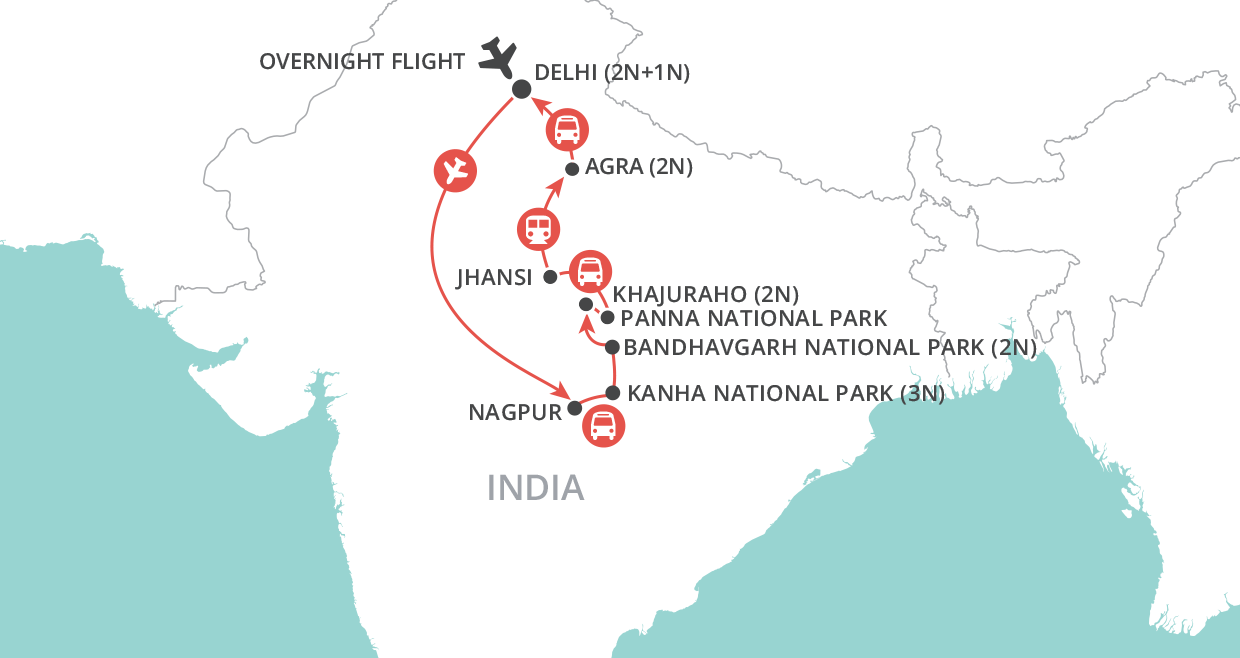
The first of our three sights is the impressive Red Fort, set in the bustling city of Delhi. The site, also know by its more popular Indian name Lal Quila, is one of the biggest draws in the city. The massive fort sits on the bank of the river Yamuna; with its thick red sandstone walls, stout bastions and fantastic turrets it has a real sense of presence. The site is also one of the oldest and largest monuments in the country; its outer wall covers just over 2 kilometres. The citadel was constructed in the 17th century by Shahjahan and serves as a link to Delhi’s imperial past.

Next we have the magical Hawa Mahal Palace, located in the city of Jaipur. This prominent building is one of the most impressive in the region, mainly due to its unique architecture and bright terracotta red colouring. The Hawa Mahal was constructed by Maharaja Sawai Pratap Singh in 1799 and draws its design influences from both Rajputana and Mughal architecture. The building is comprised of five main stories, which taper towards the top of the building. Each of the stories features hundreds of tiny windows, cut out to form a lattice work. The building really is a must see if you’re visiting the city and is best viewed as the early morning sun catches the building.

Finally, no list of famous sights in India would be complete without a mention of the Taj Mahal. This beautiful, and iconic, monument is synonymous with love and romance. Standing proudly on the banks of the River Yamuna in Agra, the monument makes for a breathtaking sight. With its pearly white walls, exquisite carvings and murals formed of gemstones; the building itself is a mausoleum that was constructed by Mughal emperor Shah Jahan, in 1653, in memory of one of his wives, Mumtaz Mahal. Today the site is widely recognised as one of the masterpieces of the world’s heritage.

Experience all these fantastic attrations and more on a Wendy Wu tour.

Request a free copy of our brand new India brochure here.

Discovering Rajasthan

Taj Mahal close up 300x225 Discovering Rajasthan

Taj Mahal

Rajasthan is one of the largest and most populous regions in India. Its name translates to “the land of kings” and it’s well named, as the region features some of the best cultural sights in India. In this blog we take a look at three of the great destinations that you can discover on a trip to this magical location.

Udaipur – City of Lakes

Udaipur is, like many Indian cities, well known for its brilliant history, culture and scenery. It’s the lakes, as the city’s nickname would suggest, that draw in the biggest crowds though and with good reason. The five large lakes that surround the city, Lake Pichola, Dudh Talai Lake, Udai Sagar, Fateh Sagar Lake and Swaroop Sagar are said to be some of the most beautiful lakes in the whole region. That’s not the only thing the city is famous for though. The architecture of Udaipur is also spectacular; the city features some of the best Rajput-era palaces in India along with a great mix of traditional temples and memorials.

Jaisalmer – The Golden City

Jaisalmer, also know as the Golden City because of the region’s yellow sand that reflects the sunlight, is one of the oldest towns in the region. The town has a long and fascinating history, including being one of the last states to sign a treaty with the British and surviving several Medieval sieges. As with many of the region’s towns and cities the beautiful buildings are a big attraction here. One of the main features of Jaisalmer is the impressive fort that sits on a ridge above the town; the fort also contains the palace and some excellent examples of ornate Jain temples.

Delhi – Gateway to the Gangetic Plain

No blog about the cities of Rajasthan would be complete without a mention of the region’s largest city, Delhi; India’s capital city. Modern Delhi is formed of two main areas and a scattering of smaller towns; New and Old Delhi – a remnant of British rule – are the two largest. The city area has been continuously inhabited since the 6th century BC and because of this has a rich cultural and historical past. Some of the regions most famous sites are located within the city’s bounds, including the Red Fort, Humayun’s Tomb and Qutab Minar, all of which are recognised as World Heritage Sites.

This is just a small taste of what you can experience on one of the holidays to India that feature Rajasthan as a destination. It truly is an experience you won’t forget.

Request a free copy of Wendy Wu Tours newly launched India brochure here.

Yangtze’s Exciting Excursions

Yangtze River 2 300x185 Yangtze’s Exciting Excursions

Yangtze River

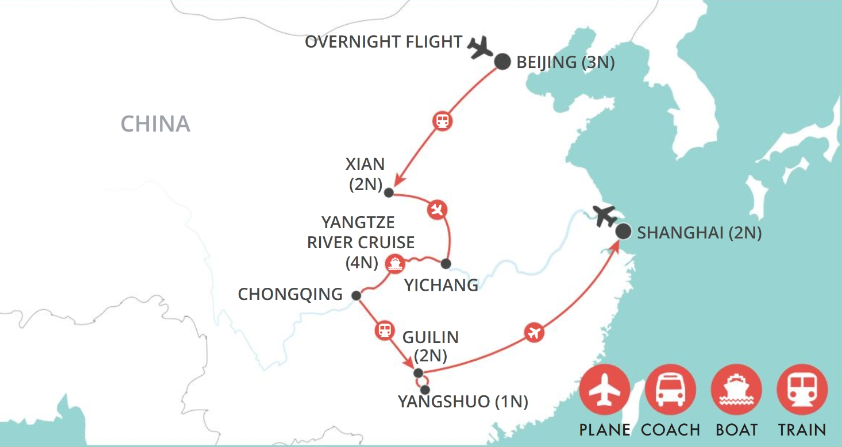
The Yangtze River cruise is becoming an increasingly popular holiday choice. Many though are unsure just what there is to see in this beautiful series of gorges. We’re going to take a look at a couple of the fantastic shore excursions day you can take along the length of the mighty Yangtze River, to give you an idea of what there is to see and do on a cruise here.

Fengdu
Situated on the north bank of the river is the ancient city of Fengdu. The city has a long history and is often referred to as the “Ghost City”, a name and reputation that it received from the Eastern Han Dynasty. The name comes from a story about two Chinese officials, Wang Fangping and Yin Changsheng, who came to the city to practice their Taoist teachings. The story goes on to tell of their journey to eventual immortality through self-cultivation. It’s this story combined with the a strange twist that the surnames of the pair Yin and Wang combine into what sounds like “King of Hell” in Chinese, hence Fengdu becoming known as the “Ghost City”.

Since the period of the Eastern Han Dynasty forty eight temples have been constructed on the site, with fantastical names such as “Hall of the Jade Emperor”, “Boundary Between the Living and the Dead”, ” the “Ridge of Helplessness” and the “Balcony of Nostalgia”. These all make for a fascinating trip and are excellent examples of Chinese architecture.

Shennong Stream
The beautiful Shennong Stream is another great trip out for those who want to see a little more of the natural wonders of this region. The stream is one of the tributaries that flow into the Yangtze River. It runs for over 60km from its head in the southern part of Shennongjia Natural Reserve, all the way down to where it connects with the Yangtze at Xirangkou. Shennong is well known for its natural beauty, often rated as better than that of the neighboring Lesser Three Gorges in Wushan County, and its calm, crystal clear waters and sheer gorge walls really do make for a spectacular sight.
The stream can be enjoyed from a peapod boat, and skimming along the stream on one of these really is the best way to see the river. A day trip out here feels a lot more intimate than the larger, and busier, Yangtze, so if you get the chance it’s well worth it.